
(Post-)Habsburg Modernity - What is Central-Europe’s contribution to global progress and modernity?

9-10 July 2026
#workshop
-
Recent scholarship highlighted – often in a slightly sensationalist way – the Austrian and Austro-Hungarian origins of theories, ideas, ideologies and institutions shaping global conditions or contributing to transnational, often global governance, like the Austrian school of economics and neoliberalism, Interpol, or even the European Union. While such sporadic forays into the history of modernity hardly delivered a consistent picture of how Austria-Hungary was embedded in the process of making modernity, together with fascinating ongoing research projects carried out mostly by early career scholars, they certainly encouraged a more systemic take on this broad question. One that went beyond the customary themes of earlier scholarship such as psychoanalysis, scientific transfers, or individual biographies.
At our workshop, we looked for answers to the question of how the conditions of Austria-Hungary shaped progress and the global process of modernization since the late 19th century. Progress was not a homogenous phenomenon following a model that was replicated all over the world similarly. Instead, it was a process that flowed from region to region, often back and forth while reshaping society and social conditions, based on inputs coming from everywhere. Europe in a broader sense was central to this process as a node, but so was the US, as a pole within a binary with Europe already in the perception of contemporaries. Many saw a model of modernity emerging in the US and spreading to Europe and beyond, generating tensions and conflicts later subsumed under the rubric of Americanization. Moreover, even the post-WWI international order, with the League of Nations and its transnational expert organizations, was understood as the realization of a new concept of transnational governance and part of a US plan for lasting world peace.
This dichotomy was, however, often misconceived as not everything coming from the US had American origins. Certainly, the US played a central role in shaping the 20th century, but – exactly because of its outsized role within financial and business networks, the significance of its universities, the activities of its generously endowed charitable foundations, and the influence of its popular and mass culture – it was not infrequently just a transmitter of thoughts and ideas emerging elsewhere – and a battlefield of ideas from abroad about how the US, and through the US global modernity, should look like.
While it was premature to make judgments about how much one or the other region shaped global modernity, one thing was clear: Austria-Hungary was fully embedded into these changes. Our workshop not only contended that its own conditions were absorbed by the global process and shaped it significantly; it used its example to understand this process of absorption and transfer better and to highlight its unique (post-)Habsburg features.
Thus, this venue attempted to exploit the complex and ever more central role of the US in shaping Western modernity to inquire about the role of Central Europe in a broader sense, and that of Austria-Hungary in a narrower one as well. We looked at ideas and the persons promoting them which travelled from Austria-Hungary to the US and had a significant impact on social, cultural, economic, and political changes there and globally too. We also looked at ideas coming from the US, especially when transmitted through (post-)Habsburg figures, as these cases highlighted the best adaptation and adoption. By applying this lens, we hoped to capture the salience of Central European conditions in shaping global history in unexpected and often invisible ways.
That meant that we invited papers that went beyond a description of transfers in terms of content and adaptation. The participants were asked to elaborate on how the specific ideas and/or the specific biographies of their promoters were formed within the context of Austria-Hungary and Central Europe, in what ways they reflected experiences from there, and in which ways those experiences were linked to general and global issues of progress and modernity.
Moreover, we contrasted the main (post-Habsburg) cases with a few other Central European ones in order to grasp the potential difference between the Central European contribution in general and the specifics of the (post-)Habsburg one. Thus, we looked at cases in which the US or Central Europe, including the (post-)Habsburg region, were not just origins, but conduits of progress and got entangled in the process of emerging modernity. By bringing them into comparison, we hoped to elucidate their unique role in modernity. While we used concrete case studies with direct US linkages, we aimed to contribute to global history, not only to the history of US-(post-)Habsburg relations. Therefore, we planned to publish an edited volume based on the papers with an academic press (CEU Press/Amsterdam University Press, Purdue University Press, Routledge), if possible in Open Access.
Finally, with our venue, we intended to bring together early career scholars whose work resonated with each other but had not yet had the chance to engage in a discussion. We hoped that this workshop would establish more lasting contacts, and even serve as a core for a larger network integrating scholars working on related topics.
At our workshop we are looking for answers to the question how the conditions of Austria-Hungary shaped progress and the global process of modernization since the late 19th century. Progress was not a homogenous phenomenon following a model that was replicated all over the world similarly. Instead, it was a process that flowed from region to region, often back and forth while reshaping society and social conditions, based on the inputs coming from everywhere. Europe in a broader sense was central to this process as a node, but so it was the US, as a pole within a binary with Europe already in the perception of contemporaries. Many saw a model of modernity emerging in the US and spreading to Europe and beyond, generating tensions and conflicts later subsumed under the rubric of Americanization. Moreover, even the post-WWI international order, with the League of Nations and its transnational expert organizations was understood as realization of a new concept of transnational governance and part of a US plan of lasting world peace.
This dichotomy is, however, often misconceived as not everything coming from the US had American origins. Certainly, the US played a central role in shaping the 20th century, but – exactly because of its outsized role within financial and business networks, the significance of its universities, the activities of its generously endowed charitable foundations, the influence of its popular and mass culture – it was not infrequently just a transmitter of thoughts and ideas emerging elsewhere – and a battlefield of ideas from abroad about how the US and through the US the global modernity should look like?
While it is premature to make judgments about how much one or the other region shaped global modernity, one thing is clear: Austria-Hungary was fully embedded into these changes. Our workshop not only contends that its own conditions were absorbed by the global process and shaped it significantly. It uses its example to understand this process of absorption and transfer better and to highlight its unique (post-)Habsburg features.
Thus, this venue attempts to exploit the complex and ever more central role of the US in shaping Western modernity to inquire about the role of Central Europe in a broader and that of Austria-Hungary in a narrower sense too. We will look at ideas and the persons promoting them which travelled from Austria-Hungary to the US and had a significant impact on social, cultural, economic, political changes there and globally too. We also look at ideas coming from the US, especially when transmitted through (post-)Habsburg figures, as these cases highlight the best adaptation and adoption. With applying this lens, we hope to capture the salience of the Central European conditions in shaping global history in unexpected and often invisible ways.
That means that we invite papers that go beyond a description of transfers in terms of content and adaptation. The participants are asked to elaborate on how the specific ideas and/or the specific biographies of their promoters were formed within the context of Austria-Hungary and Central Europe. In what ways they reflect experiences from there and in which ways those experienced were linked to general and global issues of progress and modernity,
Moreover, we contrast the main, (post-Habsburg) cases with a few other Central European ones in order to grasp the potential difference between the Central European contribution in general and the specifics of the (post-)Habsburg one. Thus, we are looking at cases in which the US or Central Europe, including the (post-)Habsburg region were not just origins, but conduits of progress, got entangled in the process of emerging modernity, and with bringing them in comparison, we hope to elucidate their unique role in modernity. While we use concrete case studies with direct US linkages, we hope to contribute to global history, not only to the history of US-(post-)Habsburg relations. Therefore, we plan to publish an edited volume based on the papers with an academic press (CEU Press/Amsterdam University Press, Purdue University Press, Routledge), if possible in Open Access.
Finally, with our venue, we intend to bring together early career scholars whose work resonates with each other but have not yet had the chance to engage in a discussion. We hope that this workshop will establish more lasting contacts, even serve as a core for a larger network, integrating scholars working on related topics.
Avant-Garde, Workers’ Culture, and Political Struggle: ProletGard at ELHN 2026
16–19 June 2026
#conference
Learn more ➔
UNKNOWN
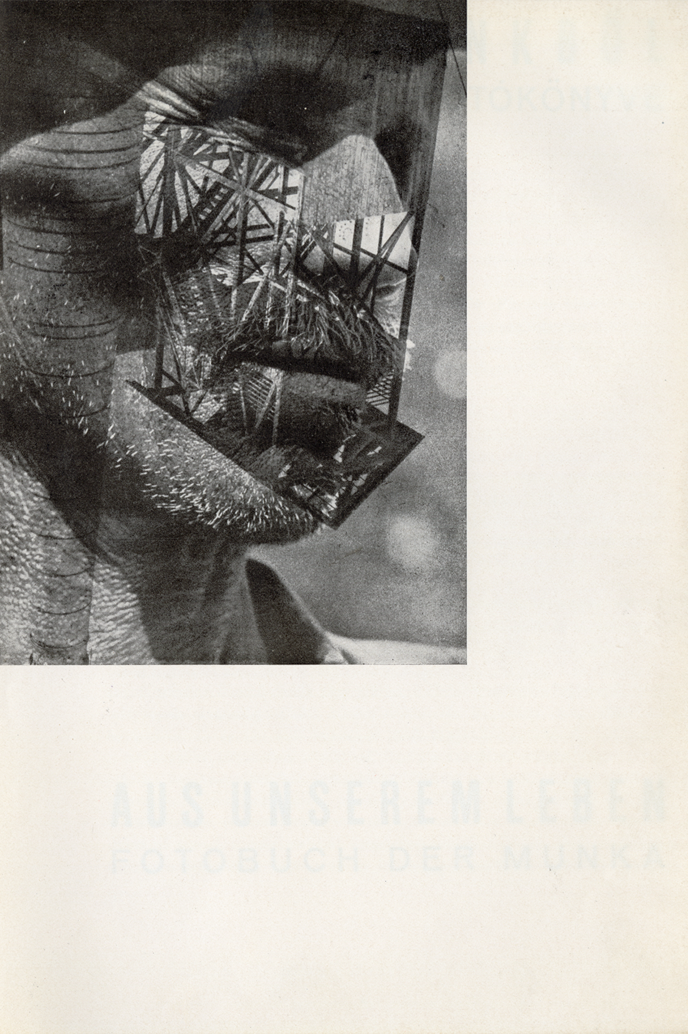
—— A montage based on Ferenc Haár’s photographs from the volume A mi életünkből [From Our Life], a photobook published in 1932 by Lajos Kassák’s journal Munka [Work].
-
The talk reflects on the methodological and theoretical stakes of studying the entanglements of workers’ culture, labor movements, and the avant-garde in East-Central Europe. Focusing on questions of circulation, readership, and the cultural politics of avant-garde journals, the presentation situates the project within broader debates on cultural practices as sites of political struggle. It asks how avant-garde artistic strategies travelled into working-class culture and, conversely, how engagement with workers and labor movements transformed avant-garde artistic practices themselves.
The panel as a whole examines workers’ culture not as a fixed ideological formation, but as a constellation of lived and performed practices—including choirs, amateur theatre, sport activities, political festivals, and emotionally charged commemorative events—that shaped collective identities through the body and the senses. Particular emphasis is placed on the aesthetics of working-class politics, the emotional dimensions of collective action, and the role of culture in forging anti-fascist alliances and alternative public spheres.
Bringing together perspectives from labor history, performance studies, art history, and cultural studies, the panel also addresses contemporary questions of historiography and curatorial practice: how histories of workers’ culture are shaped by geopolitical hierarchies of knowledge production, and how embodied and emotional dimensions of labour history can be made visible today through archives, exhibitions, performances, and education.
The panel is chaired by Martin Bernátek and Georg Spitaler.
Gábor Dobó Presented Lecture on Proletarian Avant-Garde Periodicals in Prague
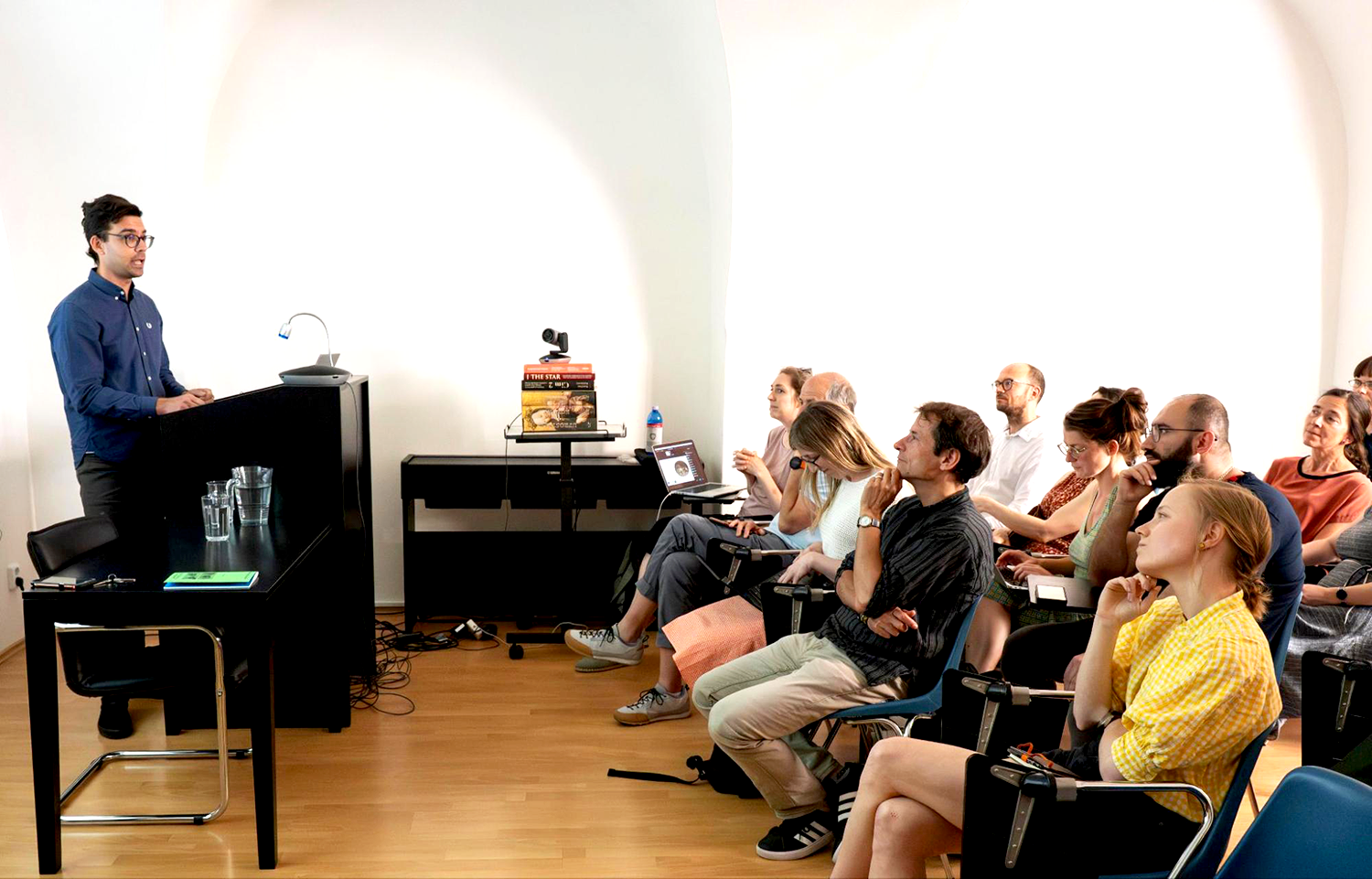
Photo credit: Petr Zinke
26 May 2026
#lecture
Learn more ➔
-
Particular attention was devoted to collective forms of reading and interpretation within workers’ movements, including speaking choirs and other performative practices that transformed printed texts into shared cultural experiences. The lecture also addressed the role of periodicals in the formation of a workers’ movement counter-culture and discussed how avant-garde techniques circulated beyond artistic circles into broader working-class environments.
Focusing on the materiality of print culture, Dobó highlighted the importance of journals and books as physical objects that were read collectively, circulated through formal and informal networks, transported across national borders, and often subjected to censorship. Examples from archives, libraries, and museum collections demonstrated how traces of use—from ownership marks and annotations to institutional stamps—can provide valuable insights into the social history of reading.
Gábor Dobó’s Talk on Musica nuova and Avant-Garde Speaking Choruses at the Università di Udine
21 April 2026
#conference
Learn more ➔
-
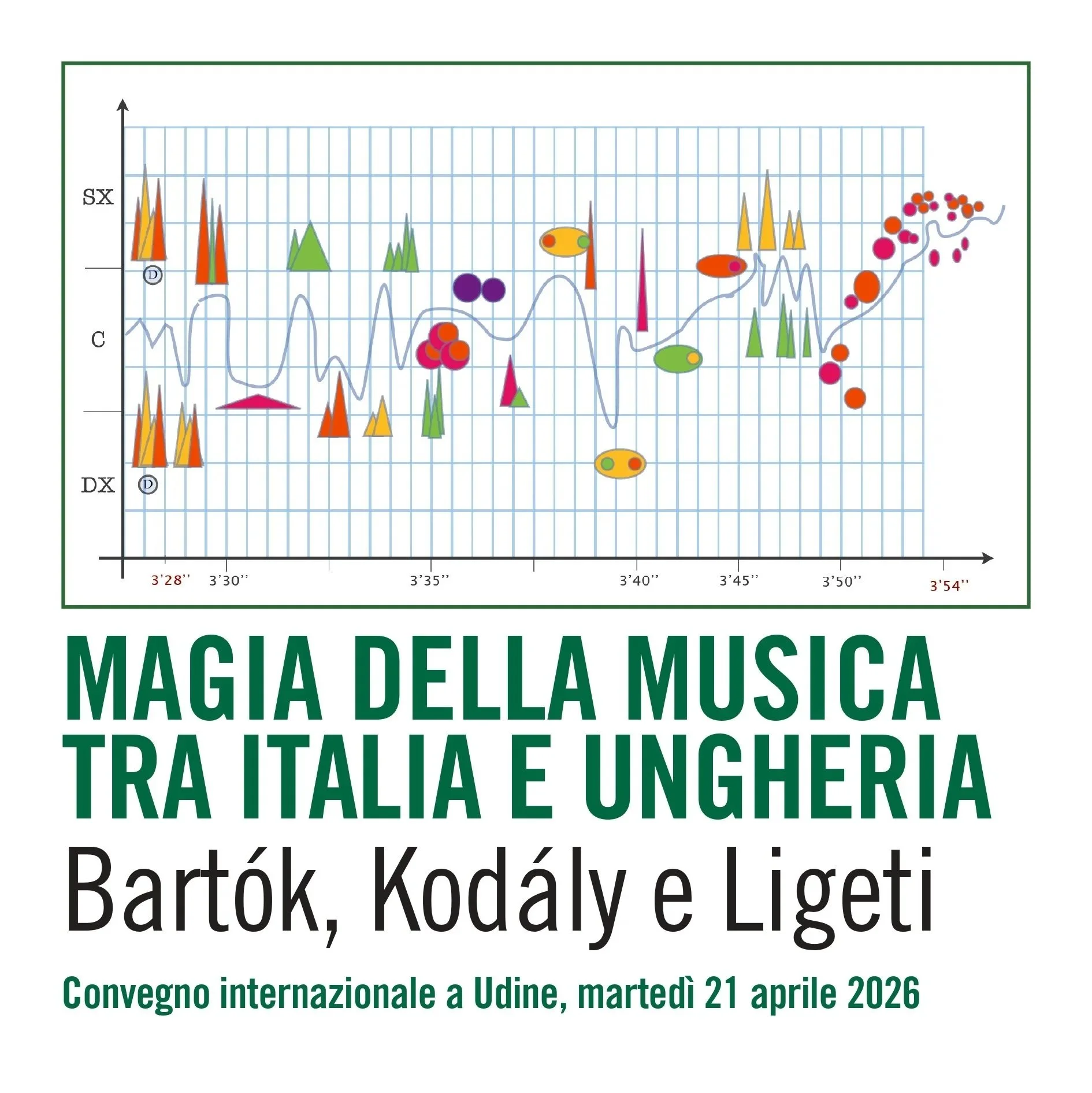
The presentation examined three decades of Hungarian avant-garde culture, tracing the changing relationship between avant-garde movements and music through a central interpretive thread. Starting from the premise that Hungarian avant-garde movements—much like their counterparts elsewhere in Europe—were largely organized around journals and periodicals, Gábor highlighted the crucial role these publications played in shaping artistic exchange and engagement with music.
His lecture explored how the relationship between avant-garde periodicals and music evolved across three distinct historical phases, demonstrating how journals not only reflected but also actively constructed changing conceptions of modern music and the musical avant-garde. By focusing on periodicals as sites of cultural production and transnational exchange, the presentation offered new perspectives on the intersections of print culture, artistic networks, and experimental musical practices in twentieth-century Hungary.